Reinsurance
05 minutes

Balancing discipline and competition in the softening cycle

Vuyo Rankoe, Executive Director of Non-Life at Africa Re, examines the early signs of a softening reinsurance cycle. He highlights the importance of disciplined underwriting, selective competitiveness, and robust analytics, ensuring African insurers and reinsurers maintain portfolio resilience while adapting to evolving market conditions.
Written by
Vuyo Rankoe
Published on
December 3, 2025

After three years of firm market conditions, the global reinsurance landscape is showing early signs of softening. Dedicated capital has reached record levels, alternative capacity is rebuilding and competition is once again visible in renewal discussions. For cedants across Africa this provides welcome relief. For reinsurers, it re-introduces a familiar challenge: how to compete without unwinding the technical gains made during the hardening phase.

Reinsurance market cycles are not new. The post-2022 hardening restored rate adequacy and strengthened underwriting governance after a prolonged period of thin margins. However, as seen in past cycles, when competition accelerates faster than underlying risk fundamentals justify, discipline can erode quickly and quietly.

Why this cycle is different

The current phase is not a uniform softening. It is selective and data-driven, shaped by three structural developments…

First, while global capital is strong, it is not abundant. Catastrophe losses remain within tolerance, but reinsurers continue to manage elevated volatility from secondary perils such as flood, fire and convective storms. This has kept attachment logic and aggregate control high on the agenda.

Second, expectations around exposure transparency and data maturity have increased. Reinsurers want to understand not only the size of an exposure but how it is being monitored, modelled and managed. Portfolios supported by credible analytics and robust governance will attract the most competitive terms.

Third, Africa’s regulatory landscape is maturing. The adoption of risk-based capital frameworks in South Africa, Kenya, Morocco, Namibia and Ghana is improving underwriting discipline and solvency oversight. This allows many African insurers to enter the softening cycle from a stronger position than in previous market turns.

The risk of over-correction

History shows that the most damaging aspect of soft markets is often not the reduction in price, but the lowering of retentions and weakening of attachment structure. When treaties begin to absorb attritional or frequency-driven losses, volatility shifts back into the reinsurance layer and the foundation of pricing adequacy weakens.

For African insurers, this risk is heightened. Catastrophe exposures in many markets are geographically concentrated, infrastructure is uneven, and inflation continues to drive asset value growth, meaning nominal rates may soften while underlying severity potential is rising. The discipline rebuilt since 2021 should not be surrendered for short-term premium relief.

“Responding to a softening cycle does not require rigidity. It requires disciplined selectivity.”

Vuyo Rankoe
Executive Director: Non-Life, Africa Re

Selective flexibility and partnership

Responding to a softening cycle does not require rigidity. It requires disciplined selectivity.

In higher catastrophe layers, where losses have been limited and alternative capital is increasingly active, introducing competition and exploring multi-year stability features may improve outcomes without compromising portfolio resilience.

Where mid-tower layers sit close to frequency bands, decisions should be driven by event-level analysis and long-term loss patterns to avoid inadvertently absorbing attritional volatility.

For flood-exposed portfolios, particularly in fast-growing urban centres, structure rather than price may be the more effective lever.  

And in classes where large industrial or energy risks create volatility, facultative placements can provide a controlled alternative to embedding risk uncertainty inside the treaty.

The cedant playbook

For insurers entering renewal discussions in a softening environment, five priorities stand out:

  1. Lead with exposure, not price. Start renewal discussions with clear data on portfolio movement, insured values and concentration zones before debating rates.
  1. Maintain credible retentions. Retention levels reflect confidence and maturity. Lowering them prematurely reintroduces volatility.
  1. Target competition selectively. Upper layers are more fluid; lower layers remain performance-sensitive.
  1. Demonstrate governance and analytics. Transparency on accumulation monitoring, referral thresholds and claims protocols builds reinsurer confidence.
  1. Co-develop solutions for emerging risks. Urban expansion, energy transition and climate patterns require innovation, not just cheaper capacity.

Looking ahead

Africa’s reinsurance sector has matured considerably over the past decade. As the cycle turns, the combination of regulatory improvement, better data and deeper relationships positions the region for a more measured response than in previous soft markets.

Soft phases reward insight, not complacency. The objective is not simply to secure lower pricing, but to achieve balance between competitiveness and sustainability, growth and prudence. If reinsurers and cedants maintain discipline, invest in analytics and price for the true cost of risk, reinsurance will continue to serve as a stabilising force for Africa’s growing economies.

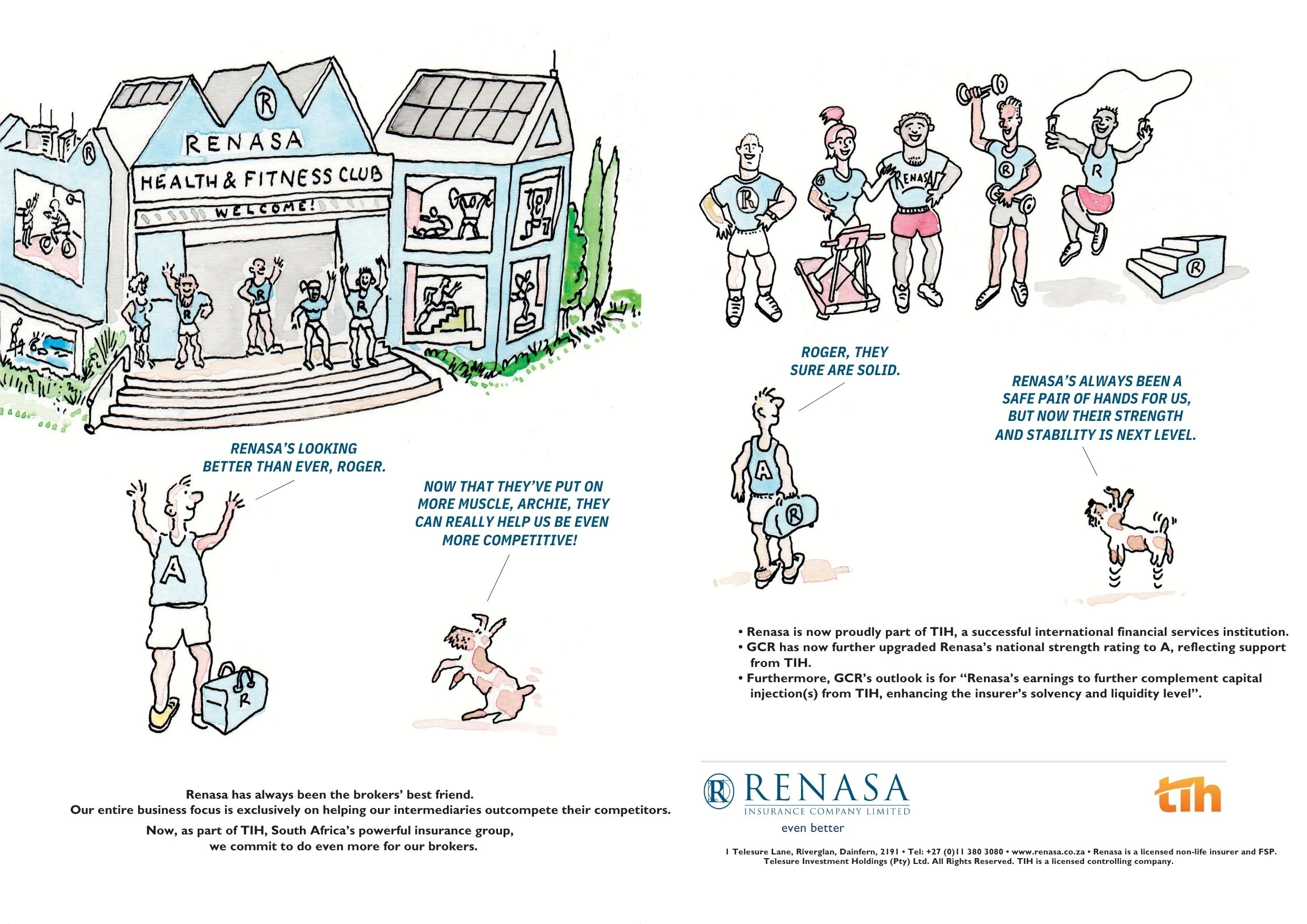
Renasa has always been the brokers’ best friend.

Our entire business focus is exclusively on helping our intermediaries outcompete their competitors. Now, as part of TIH, South Africa’s powerful insurance group, We commit to do even more for our brokers.

Renasa is a licensed non-life insurer and FSP. Telesure Investment Holdings (Pty) Ltd. All Rights Reserved. TIH is a licensed controlling company.

Dashboard mockup