Technology
05 minutes

Data isn't the advantage. Trusted data is.

Data alone is no longer a competitive advantage. Angus Black explains why insurers must prioritise trusted, governed and decision-ready data to unlock better underwriting, responsible AI adoption and faster, more confident business decisions.
Written by
Angus Black,
Published on
July 22, 2026

For years, the insurance industry has been told that data is its greatest strategic asset. Judging by the volume of information insurers collect today, that message has certainly landed.

Data warehouses, lakes and repositories are growing at an unprecedented pace, with organisations storing years of underwriting, claims and operational information. Yet despite having more data than ever before, many executives still admit they struggle to extract meaningful insight from it. The challenge is no longer access to information. It is converting that information into better decisions.

The competitive advantage today does not belong to the organisations with the biggest data stores. It belongs to those with the most trusted, standardised and decision-ready data. That distinction is becoming increasingly important.

More data doesn't automatically create more insight - There is no shortage of data across the insurance value chain. The real shortage lies in confidence. For data to become genuinely valuable, it must be collected consistently, reconciled back to its source, and governed in a way that gives decision-makers confidence that what they are seeing is accurate.

If acquiring data is inconsistent or requires constant intervention, that should immediately raise concerns. Likewise, if organisations cannot trace information back to its original source or explain how figures were produced, the value of that data diminishes significantly.

Without trust, data becomes something people question rather than something they use.

The biggest opportunities already exist - Many insurers believe they need more information before they can improve underwriting, pricing or customer engagement. In reality, some of the greatest opportunities are already hidden inside their existing data.

Most insurers possess years of underwriting and claims history. The real opportunity lies in analysing that information at a far more granular level and enriching it with relevant external data. Weather patterns, road conditions, inflation, supply chain costs and other environmental factors all influence insurance risk. When these external datasets are combined with internal underwriting and claims information, insurers gain a much richer understanding of individual risks.

The same principle applies to broker relationships. Looking only at high-level portfolio performance can often hide the real story. A seemingly underperforming book of business may, on closer inspection, reveal that only a small group of policies or a particular claims category is driving poor results.

That level of insight allows insurers to have far more constructive conversations with brokers, focusing on specific issues rather than making broad assumptions about an entire portfolio. Ultimately, competitive advantage will come from making better decisions sooner, not from simply collecting more data.

"The competitive advantage today does not belong to the organisations with the biggest data stores. It belongs to those with the most trusted, standardised and decision-ready data."

Angus Black,
Director, BarnOwl Data Solutions

AI starts long before AI - Artificial intelligence dominates almost every industry conversation today, but organisations sometimes overlook a fundamental truth.

AI is only as good as the data beneath it. Preparing for AI is far less about selecting the right model than it is about doing the foundational work that many organisations find less exciting. Data quality must be addressed. Data lineage needs to be understood. Governance frameworks must be established. Data must be reconciled back to trusted source systems.

These activities may not generate headlines, but they determine whether AI produces reliable insights or simply automates inaccurate information. Equally important is ensuring organisations can explain where data originated, how it has been used and what decisions AI systems are influencing. As regulation around AI continues to evolve, transparency and accountability will become just as important as technical capability.

Without those foundations, organisations may be AI curious- but they are not AI ready.

Making data part of everyday business - The insurers gaining the greatest value from data share one important characteristic. Data is not confined to a reporting team. Instead, it flows across the organisation, supporting operational decisions, automating processes and informing business strategy every day.

Successful organisations also establish a common language around data. Different departments are no longer asking similar questions using different terminology. Everyone works from the same trusted information and the same understanding of what the data represents.

That consistency becomes a powerful enabler of faster and more confident decision-making.

Focus on value before transformation - If I were stepping into the role of Chief Data Officer, the first instinct would not be to replace every existing system.

Instead, I would identify a small number of business decisions that matter most, strengthen the data supporting those decisions and build confidence in the information being used.

Delivering measurable business value does not always require a complete transformation programme. Often, improving trust in a handful of critical datasets can create immediate benefits that demonstrate the value of a broader data strategy.

Data should tell the truth, even if it is not always the answer the business hoped to see. Once that truth is established, meaningful improvement becomes possible.

The future belongs to trusted insight - Over the next few years, near real-time data will become standard across the insurance industry. External data enrichment will increasingly become part of everyday underwriting, while AI agents will automate many routine tasks and help professionals focus on higher-value work. However, none of these advances will replace the need for trusted information.

Technology will continue to evolve rapidly, but the organisations that succeed will not necessarily be those with the most sophisticated AI platforms. They will be those that have invested in trusted data, sound governance and the ability to turn information into timely, explainable and actionable insight.

In the end, data itself is not the competitive advantage. The ability to trust it, and act on it, is.

Barn Owl Data Solutions

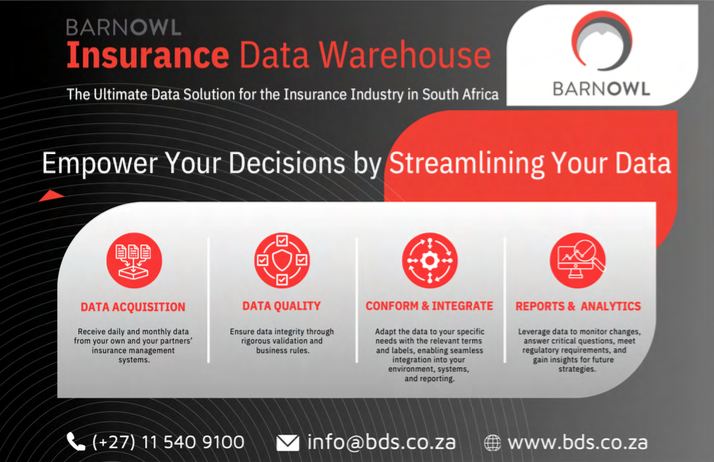
Empower your decisions by streamlining your data Data Acquisition Data Quality Conform & Integrate Reports & Analytics