Short term
06 minutes

Moving people, shifting risks, and the future of passenger transport insurance

Passenger transport insurance in South Africa is evolving as taxis and e-hailing converge into a dynamic mobility ecosystem. Rising complexity, changing consumer behaviour and operational pressures are driving insurers and brokers to adopt more collaborative, risk-focused approaches in this high-impact sector.
Written by
Published on
March 24, 2026

Few sectors capture the complexity of South Africa’s economic and social fabric quite like passenger transport. It is a space where necessity, innovation, informality, and structure intersect, and where insurance plays a critical, if often underappreciated, role.

In my recent discussion with Mike Mgodeli, Managing Director of RTU Renasa Taxi Insurance, it became clear that the traditional way of thinking about “taxi insurance” is no longer sufficient. The conversation has moved beyond taxis as a standalone class of business to something far broader: a dynamic, evolving passenger transport ecosystem.

“It’s really about passenger transport,” Mgodeli explains, “not just taxis.” That distinction is important. While the minibus taxi industry remains a cornerstone of mobility in South Africa, it now operates alongside, and increasingly in conjunction with, the e-hailing sector. Rather than viewing these as competing forces, Mgodeli sees them as complementary.

Taxis continue to dominate longer, high-volume commuter routes, providing cost-effective transport for millions of South Africans. E-hailing, on the other hand, has carved out a role in more personalised, on-demand mobility, solving for flexibility, convenience, and the so-called “last mile.” Together, they form a hybrid system that reflects how people actually move.

And that movement is changing - Post-COVID trends indicate a shift in behaviour. Traditional taxi trip volumes are still in recovery, while e-hailing continues to gain traction as consumers become more comfortable with digital, on-demand services. At the same time, broader societal changes are influencing transport choices.

The user is changing,” Mgodeli notes. The traditional model, where households aspire to own multiple vehicles, is giving way to more flexible approaches. Increasingly, families are combining ownership with usage, perhaps keeping one primary vehicle while relying on e-hailing or other services for additional mobility needs.

This shift is particularly evident among younger consumers and gig economy participants. Flexible working arrangements, reduced office commuting, and a growing acceptance of shared or on-demand services are reshaping the demand for transport.

In this context, ownership is no longer the only measure of mobility. Infrastructure realities further reinforce this trend. South Africa’s rail network, while essential, remains inconsistent in its ability to serve the broader population. Bus systems, though improving in certain areas, are not yet sufficiently scaled or reliable to meet national demand.

This leaves a critical gap, one that taxis and e-hailing continue to fill. “There will always be demand,” Mgodeli says. “Public transport is a necessity.” But with opportunity comes complexity.

From an insurance perspective, the passenger transport sector is inherently high-risk. Driver behaviour, vehicle utilisation, regulatory compliance, and external cost pressures, particularly fuel, all contribute to a challenging underwriting environment.

“Passenger transport insurance is no longer about a single class of business, it is about understanding a complex, evolving ecosystem that keeps South Africa moving.”

COVER

At the same time, regulatory developments in the e-hailing space are raising barriers to entry, increasing compliance requirements, and potentially altering the economics for operators. Add to this the impact of global events on fuel prices, and the pressure on margins becomes clear. For insurers and underwriting managers, this creates a delicate balancing act: supporting growth while maintaining sustainability.

Our approach is rooted in collaboration. If you don’t innovate, you’ll be left behind,” Mgodeli states. Rather than dictating terms, RTU positions itself as a partner across the value chain, working with brokers, fleet operators, and clients to design solutions that are practical, scalable, and aligned with real-world conditions.

This partnership model reflects a broader shift in the industry. Insurance is no longer a standalone product; it is part of a wider ecosystem that includes financing, procurement, and operational management.

Brokers, in particular, are playing an increasingly strategic role. “The broker is evolving,” Mgodeli explains. “From a traditional intermediary to a risk specialist.” This evolution is driven by necessity. In a complex, high-risk environment like passenger transport, clients need more than a policy, they need guidance, insight, and support across their entire operation.

Modern brokers in this space are deeply involved in their clients’ businesses, understanding everything from fleet composition and driver management to financing structures and cost dynamics. The conversation has shifted away from price alone to a more holistic focus on efficiency, sustainability, and risk mitigation. It is a far more integrated and collaborative approach. For RTU, maintaining a broker-centric model is non-negotiable. The broker remains the primary distribution channel, but also a critical link between insurer and client, a role that is becoming more valuable as complexity increases.

Looking ahead, Mgodeli offers a thoughtful perspective on the future of mobility in South Africa. The next generation, he suggests, will view transport very differently. Where previous generations prioritised ownership, of cars, homes, and assets, younger consumers are embracing flexibility. They are less attached to physical ownership and more focused on access, convenience, and digital integration.

They want to be digital citizens,” he says. This mindset shift has profound implications for the insurance industry. Products, distribution models, and service delivery will all need to adapt to a world where usage-based models, platform integration, and real-time engagement become the norm.

At the same time, cost pressures will continue to shape the market. Rising fuel prices, increased compliance costs, and tightening margins for operators may lead to higher claims frequencies and greater strain on underwriting results. For insurers, the challenge will be to anticipate these pressures and work proactively with clients to manage them.

As always in this sector, there are no easy answers. But there is one certainty: Passenger transport will remain a critical enabler of economic activity and social mobility in South Africa. And as it evolves, so too must the insurance solutions that support it. In a market where millions rely on these systems every day, getting that balance right is not just a business imperative, it is a societal one.

And in true South African fashion, it promises to remain anything but dull.

Renasa

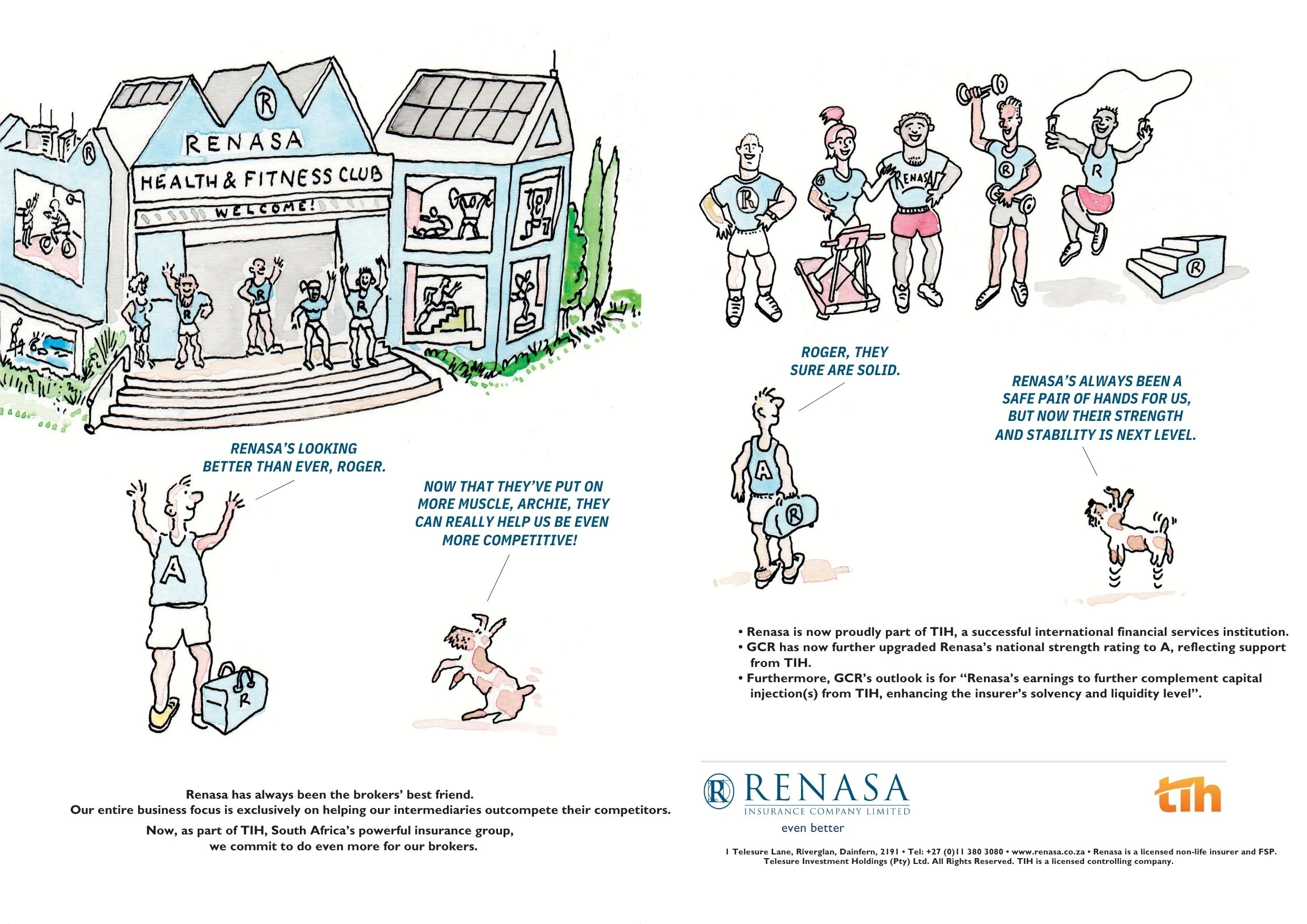
Our entire business focus is exclusively on helping our intermediaries outcompete their competitors. Now, as part of TIH, South Africa’s powerful insurance group, We commit to do even more for our brokers.
Renasa is a licensed non-life insurer and FSP. Telesure Investment Holdings (Pty) Ltd. All Rights Reserved. TIH is a licensed controlling company.