Events
07 minutes

SAFIS 2026: An industry looking beyond policies and toward purpose

SAFIS 2026 highlighted how South Africa’s funeral insurance industry is evolving beyond product sales toward ecosystem partnerships, digital innovation and community-centred value. The summit explored AI, compliance, embedded insurance and trust, while reinforcing that empathy and human connection remain central to the sector’s future.
Written by
Published on
May 25, 2026

The South African Funeral Industry Summit (SAFIS) 2026, hosted by 360 Administration and Systems at The Tryst in Sandton, was far more than a conference about funeral insurance. It became a strategic conversation about trust, technology, community impact, and the future sustainability of one of South Africa’s most socially important industries.  

Under the theme “Giving back to the community,” SAFIS 2026 brought together funeral parlour owners, brokers, underwriters, payment providers, technology partners, compliance specialists, and insurers to confront the realities reshaping the sector, from AI and predictive analytics to regulation, embedded insurance, digital payments, and the changing expectations of consumers.  

The summit succeeded because it did not shy away from difficult questions. Instead, it embraced them.

Collaboration over competition

Opening the event, 360 Administration and Systems CIO Marius Brits set the tone with a message that resonated throughout the day: the funeral industry can no longer operate in silos. SAFIS itself was born from the idea that administrators, insurers, payment providers, brokers, and funeral parlours need shared platforms for collaboration rather than isolated competition.  

What stood out was the deliberate shift in tone from traditional competitive positioning toward ecosystem thinking. Even competitors were welcomed into the conversation. The message was clear: if the industry is to move forward sustainably, collaboration must become a strategic imperative rather than an optional extra.

That spirit became one of the defining themes of SAFIS 2026.

Innovation with human purpose - Perhaps the strongest impression left by the summit was that technology in the funeral industry is no longer theoretical, it is operational, practical, and increasingly intelligent.

360 Administration and Systems CEO Steven Sands unveiled a series of AI-driven innovations that demonstrated how rapidly the sector is evolving. These included:

  • AI-powered reporting tools capable of generating real-time business insights through natural language prompts  
  • Biometric onboarding and liveness verification to combat fraud and improve compliance  
  • Predictive analytics models designed to identify policy lapse risks before they occur  

The presentations reflected a broader industry transition from reactive administration to proactive intelligence.

What made these discussions particularly compelling was the practical application behind the technology. AI was not presented as a futuristic gimmick, but as a mechanism to improve operational efficiency, reduce fraud, strengthen client retention, and deliver better customer experiences.

Steven Sands captured this sentiment when explaining that the goal is not to replace people, but to empower businesses and employees with better tools and insights.  

That distinction matters.

In an industry fundamentally built on empathy, dignity, and trust, technology must enhance human relationships rather than replace them.

The industry’s biggest challenge: Trust - One of the most thought-provoking discussions emerged during the insurance leadership panel featuring representatives from SRM Group Business Sanlam, Rand Mutual Assurance, 1Life, and KGA Life.  

The panel tackled an uncomfortable but important reality: the funeral insurance market is no longer growing purely through new client acquisition. Much of the industry is simply competing for the same customers.

Banks, in particular, were identified as increasingly dominant players in funeral insurance distribution. Yet panelists argued that the banks’ success highlights a deeper issue, consumers trust banks more than insurers.  

This sparked an honest reflection on whether the insurance sector itself has failed to build sufficient trust with policyholders.

Several speakers argued that funeral parlours and brokers still hold a unique competitive advantage because of their deep community relationships and empathetic claims experiences. Unlike corporates operating from distant head offices, funeral parlours remain physically embedded in the communities they serve.  

That human connection, many suggested, may ultimately become the industry’s greatest differentiator.

The industry’s future will depend on how effectively it balances innovation with empathy.

COVER

A shift from products to ecosystems - Another defining insight from SAFIS 2026 was the growing recognition that funeral insurance can no longer exist as a standalone product.

Speakers repeatedly returned to the idea of ecosystem-driven value propositions, integrating funeral cover with health benefits, modular short-term insurance, savings, credit, rewards, and digital financial services.  

The conversation reflected a broader industry trend toward embedded insurance and holistic financial wellness.

This was particularly evident in the discussion led by Nkululeko Mndaweni, SRM Group Business Sanlam, which outlined strategies focused on partnerships, diversified product ecosystems, and integrated financial services. The emphasis was not merely on selling policies, but on supporting clients throughout their broader financial journeys.  

The industry appears to be recognising that the future belongs to businesses capable of solving multiple customer needs within trusted ecosystems.

Payments, accessibility and digital inclusion - The payments and fintech panel brought an important operational perspective to the summit. Discussions around debit orders, DebiCheck, cashless payments, reconciliation, and digital adoption highlighted both the opportunities and realities of South Africa’s lower-income market segments.  

One of the strongest themes emerging from this session was accessibility.

While digital transformation is accelerating, many consumers still operate within partially informal economies. Payment systems therefore need to accommodate irregular income streams, varying salary dates, and cash-based behaviours.

Importantly, speakers stressed that digital adoption cannot happen without trust and education.

Consumers remain highly sensitive to scams and fraudulent links, making brand trust and customer communication critical components of digital transformation. The panel agreed that technology alone is not enough, successful adoption requires patience, transparency, and ongoing customer education.  

Compliance is no longer just a regulatory exercise - The compliance panel explored another major shift underway in the industry: the evolution from “tick-box compliance” toward genuine consumer protection.  

Discussions around KYC, Treating Customers Fairly (TCF), policy wording complexity, and financial literacy revealed growing concern that many consumers still do not fully understand the products they purchase.  

A particularly striking point raised during the session was that fairness cannot simply exist in legislation, it must exist in customer outcomes.

The panel acknowledged that technology may help simplify compliance and improve customer understanding but also warned that regulation must remain practical and inclusive, particularly for lower-income consumers.

The most important theme: humanity - Ironically, for an event filled with discussions about AI, predictive analytics, automation, and digital transformation, the most powerful moments at SAFIS 2026 were deeply human.

One attendee reminded the panel that funerals are ultimately emotional experiences, not merely operational processes. Another speaker noted that the industry had spent significant time discussing systems and efficiencies, but risked overlooking the families at the centre of these services.  

That intervention grounded the entire summit.

Technology may improve claims processing. AI may predict lapses. Automation may reduce costs.

But funeral services remain, at their core, about dignity, grief, trust, and community.

The industry’s future will depend on how effectively it balances innovation with empathy.

SAFIS 2026 signals a more mature industry - What SAFIS 2026 ultimately demonstrated is that South Africa’s funeral industry is entering a new phase of maturity.

The conversations have moved beyond simple policy sales and administrative systems. The sector is now grappling with strategic questions around:

  • financial inclusion,  
  • customer trust,  
  • ecosystem partnerships,  
  • digital transformation,  
  • regulatory integrity,  
  • and long-term community impact.  

The summit succeeded because it recognised that the funeral industry is not merely a commercial sector; it is a social infrastructure.

And if the conversations at SAFIS 2026 are any indication, the industry is beginning to understand that its future growth will not be determined solely by technology or products, but by its ability to combine innovation with humanity.

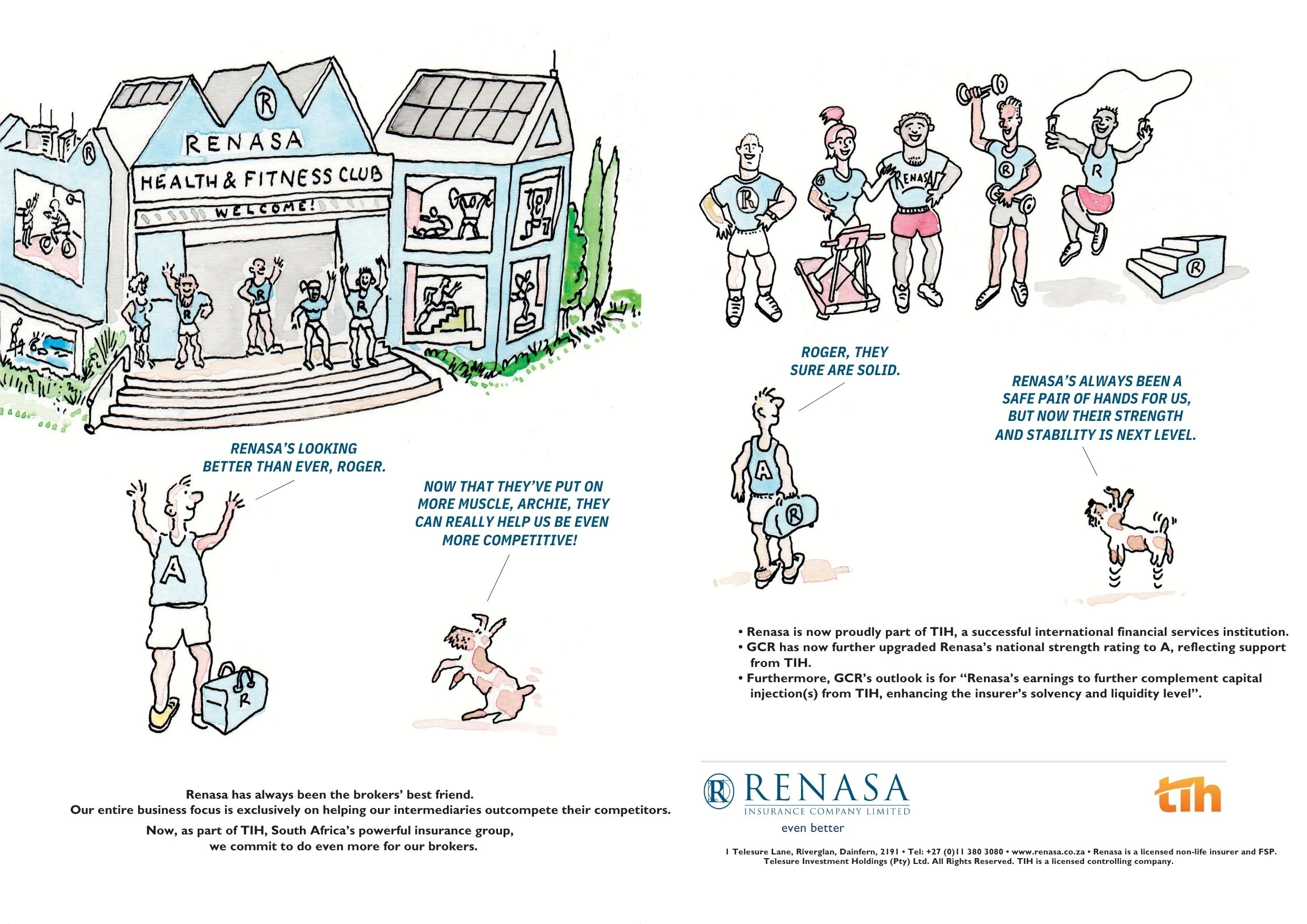
Renasa has always been the brokers’ best friend.

Our entire business focus is exclusively on helping our intermediaries outcompete their competitors. Now, as part of TIH, South Africa’s powerful insurance group, We commit to do even more for our brokers.

Renasa is a licensed non-life insurer and FSP. Telesure Investment Holdings (Pty) Ltd. All Rights Reserved. TIH is a licensed controlling company.

Dashboard mockup