Panel 2: What digitisation really means for insurers

The insurance industry has officially crossed the point of no return, digitisation is no longer something to plan for “one day.” It’s here, shaping how brokers, UMAs, and carriers compete, engage customers, and stay relevant.
But what does digitisation really mean in practice? Too often, it’s confused with launching an app, upgrading a system, or adding another API. The reality is far more complex, and more human.
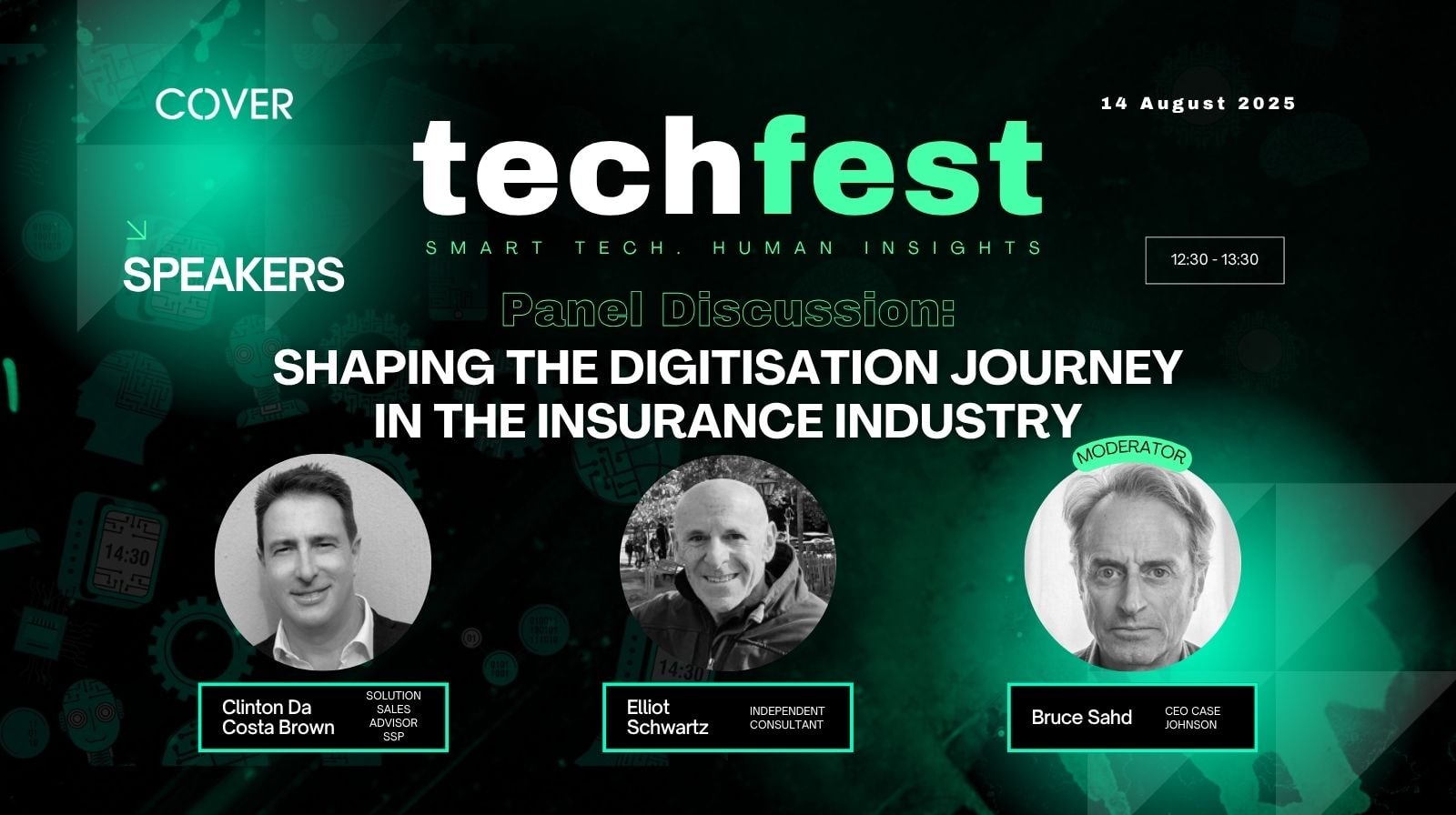
At TechFest2025, a panel of seasoned industry voices, Clinton da Costa Brown (SSP), Bruce Sahd (Quest Insurance Innovators & Case Johnson Consulting), and Elliot Schwartz (Independent Consultant & Business Advisor), unpacked the real drivers, roadblocks, and rewards of digital transformation in insurance.
It’s not about ambition, it’s about execution
Clinton da Costa Brown put it bluntly: most insurers don’t fail because of bad strategy; they fail because of poor execution.
Citing KPMG research, he noted that while three out of four insurers set cost-reduction goals through digital initiatives, only a quarter actually achieve them. The reason? Many jump straight into AI or automation before fixing foundational issues like core systems and clean data.
“Messy data blocks straight-through processing and contaminates AI models,” he warned. “It leaves firms with black-box decisions they can’t trust.”
For Clinton, the journey must follow a maturity curve: digitise, then automate, then optimise data, and only then layer in AI. Get the order wrong, and even the best digital strategy will crumble.
Customer experience is the real differentiator
Bruce Sahd shifted the focus from systems to people. “Customers no longer compare insurers to each other,” he said. “They compare us to banks and retailers, where seamless digital experiences are the norm.”
For insurers, that means thinking beyond quote-and-buy processes. It’s about creating journeys that are intuitive, personalised, and human. From onboarding to renewal, every interaction should build trust, not frustration.
Bruce called this the “frictionless future”, one where jargon, paperwork, and disconnected systems are replaced by digital experiences that anticipate customer needs. But that can’t happen through tech alone. “It doesn’t matter how advanced your systems are if the culture isn’t ready to deliver on them,” he added.
And for brokers, this is not a threat but an opportunity. Far from being replaced, they’re becoming “smart agents”, powered by data-driven tools that make their advice more relevant and empathetic.
Strategy before software
Elliot Schwartz brought it all back to business fundamentals. “Too many companies are dedicated followers of fashion,” he said, pointing to the flood of unused insurance apps.
For him, technology is only valuable when it clearly supports a defined business objective. Each organisation must choose where it competes, whether that’s scale, loyalty, or niche expertise, and build its digital roadmap around that.
The hardest part? Deciding what not to do. “Chasing every shiny new innovation leaves you a jack of all trades and master of none,” Elliot cautioned. “Digitisation isn’t about doing more; it’s about doing the right things better.”
He also sees AI as a catalyst for reinvention. Instead of simply selling products faster, insurers can use AI to shift toward problem-solving, diagnosing customer needs and prescribing bespoke solutions. “The real game-changer isn’t doing business cheaper,” he said. “It’s doing business differently, and better.”
Transformation, not tech
Across the discussion, one theme stood out: digitisation isn’t a tech project, it’s a business transformation.
- Clinton urged insurers to respect the order of maturity and fix their data first.
- Bruce challenged leaders to redesign customer journeys and culture in parallel.
- Elliot reminded them to stay strategic, make trade-offs, and reinvent where it matters most.
Digitisation, done right, lowers costs, but more importantly, it creates trust, relevance, and value in a rapidly changing market.
Because at its core, this isn’t about replacing people with machines. It’s about empowering humans to do their best work, with technology as the quiet engine that makes it possible.