
Microsoft is a strategic partner of the Innovators Network, enabling discussions that explore how AI can augment human capability and drive transformation at scale.

Sapiens is a strategic partner of the Innovators Network, supporting conversations that help insurers translate AI ambition into measurable business value.
What is COVER Innovators Network?
At the recent Innovators Network session, hosted by COVER in partnership with Sapiens and Microsoft, a clear shift emerged in how the insurance industry is approaching technology.
This was not another conversation about AI tools, pilots, or isolated innovation projects. Instead, it was a deliberate reframing, from technology in insurance to the business of insurance in a technology-driven world. In a room filled with executives, technologists, and strategic thinkers, the discussion moved beyond hype to something far more consequential: how AI is reshaping value, decision-making, distribution, and ultimately, the structure of the industry itself.
This was not another conversation about AI tools, pilots, or isolated innovation projects. Instead, it was a deliberate reframing, from technology in insurance to the business of insurance in a technology-driven world. In a room filled with executives, technologists, and strategic thinkers, the discussion moved beyond hype to something far more consequential: how AI is reshaping value, decision-making, distribution, and ultimately, the structure of the industry itself.

Session 1: AI is not optional,
but value is not guaranteed
Dr Imtiaz,COO for Absa Life
Opened the speaker sessions with a strong assertion: AI adoption is no longer a strategic choice, it is a requirement for relevance. However, his message went further. The real challenge is not access to AI but understanding how to unlock value from it.
Too often, organisations equate activity with progress. Experimenting with generative tools or running isolated pilots creates the illusion of transformation. Yet without a clear connection to business outcomes, these efforts rarely translate into measurable impact.
The opportunity lies in moving towards what he described as integrated intelligence, the ability to combine data, systems, and decision-making into a cohesive capability that delivers real business value.
Watch SessionOpened the speaker sessions with a strong assertion: AI adoption is no longer a strategic choice, it is a requirement for relevance. However, his message went further. The real challenge is not access to AI but understanding how to unlock value from it.
Too often, organisations equate activity with progress. Experimenting with generative tools or running isolated pilots creates the illusion of transformation. Yet without a clear connection to business outcomes, these efforts rarely translate into measurable impact.
The opportunity lies in moving towards what he described as integrated intelligence, the ability to combine data, systems, and decision-making into a cohesive capability that delivers real business value.

Session 2: From experimentation to execution
Graham Gordon, Product & Strategy Director - P&C at Sapiens
Posed a simple but critical question: where is the return on AI investment? Across the industry, there is no shortage of experimentation. But when executives ask what impact AI is having on profitability, growth, or efficiency, the answers are often unclear.
This highlights a growing disconnect between ambition and execution. Gordon challenged the assumption that AI initiatives automatically create value. Instead, he emphasised the need for alignment between strategy, data, and implementation. Without this, organisations risk investing heavily in technology without seeing meaningful returns.
Posed a simple but critical question: where is the return on AI investment? Across the industry, there is no shortage of experimentation. But when executives ask what impact AI is having on profitability, growth, or efficiency, the answers are often unclear.
This highlights a growing disconnect between ambition and execution. Gordon challenged the assumption that AI initiatives automatically create value. Instead, he emphasised the need for alignment between strategy, data, and implementation. Without this, organisations risk investing heavily in technology without seeing meaningful returns.

Session 3: AI's Role in Insurance Distribution and Advisory
Rupert Nicolay, Director, Industry Advisor, Worldwide Financial Services at Microsoft Brought the conversation closer to the frontline of the industry, distribution. In a market like South Africa, where brokers, advisors, and call centres remain central to customer engagement, the question is not whether AI will replace people, but how it will enhance them.
His answer was clear: The future is not human versus machine; it is human plus machine. AI is already beginning to reduce friction in everyday workflows, from onboarding and training to knowledge access and customer interaction. Advisors can access information instantly, receive real-time coaching, and personalise engagement at scale.
More importantly, AI has the potential to capture and distribute institutional knowledge, enabling average performers to operate closer to the level of top performers. This is not just about efficiency. It is about expanding capability.
Watch SessionHis answer was clear: The future is not human versus machine; it is human plus machine. AI is already beginning to reduce friction in everyday workflows, from onboarding and training to knowledge access and customer interaction. Advisors can access information instantly, receive real-time coaching, and personalise engagement at scale.
More importantly, AI has the potential to capture and distribute institutional knowledge, enabling average performers to operate closer to the level of top performers. This is not just about efficiency. It is about expanding capability.

Session 4: Where Value, Trust and Control Will Shift in an AI-Driven Insurance Industry
Marc Wilson, Managing Partner at Global AdvisorsTook a broad view, examining how AI is reshaping the structure of the industry itself. His central argument was stark: insurance is not undergoing a technology upgrade. It is experiencing a redistribution of value, trust, and control.
He identified three key shifts:
1. Value creation is being redefined As AI becomes widely accessible, traditional advantages based on data and expertise begin to erode.
2. Client ownership is up for grabs The emergence of AI-enabled customers introduces a new competitive dynamic. Digital agents may increasingly mediate the relationship between insurer and client, raising the risk that insurers become commoditised providers of capacity.
3. Trust becomes a design principle As AI takes on a greater role in decision-making, transparency and auditability become critical. Insurers must be able to explain how decisions are made, what data is used, and whether outcomes can be trusted. In a regulated environment, this is not optional, it is foundational.
Watch SessionHe identified three key shifts:
1. Value creation is being redefined As AI becomes widely accessible, traditional advantages based on data and expertise begin to erode.
2. Client ownership is up for grabs The emergence of AI-enabled customers introduces a new competitive dynamic. Digital agents may increasingly mediate the relationship between insurer and client, raising the risk that insurers become commoditised providers of capacity.
3. Trust becomes a design principle As AI takes on a greater role in decision-making, transparency and auditability become critical. Insurers must be able to explain how decisions are made, what data is used, and whether outcomes can be trusted. In a regulated environment, this is not optional, it is foundational.
Beyond efficiency
A recurring theme across all speakers was the industry’s tendency to focus on efficiency. Cost reduction is tangible, measurable, and immediate. Growth, by contrast, requires imagination. Yet the true potential of AI lies in growth.
When processes become dramatically faster and more intelligent, they enable entirely new products, new customer experiences, and new markets. The shift from a days-long underwriting process to real-time decision-making does not just improve efficiency, it changes what insurance can be. The challenge for leaders is to move beyond incremental thinking and embrace this opportunity.
When processes become dramatically faster and more intelligent, they enable entirely new products, new customer experiences, and new markets. The shift from a days-long underwriting process to real-time decision-making does not just improve efficiency, it changes what insurance can be. The challenge for leaders is to move beyond incremental thinking and embrace this opportunity.
Leadership in an age of acceleration
A unifying thread across the event was the realisation that the biggest challenge is not technology, it is leadership. AI introduces a level of speed and complexity that few organisations are equipped to handle. It requires new ways of thinking, new ways of working, and new approaches to decision-making.
It also requires a different kind of leadership. Not just technical understanding, but:
- The ability to navigate uncertainty
- The willingness to challenge existing models
- The discipline to align innovation with value, and
- The capacity to bring people along on the journey
As Marc noted, AI is ultimately an amplifier. It magnifies both strengths and weaknesses within an organisation.
It also requires a different kind of leadership. Not just technical understanding, but:
- The ability to navigate uncertainty
- The willingness to challenge existing models
- The discipline to align innovation with value, and
- The capacity to bring people along on the journey
As Marc noted, AI is ultimately an amplifier. It magnifies both strengths and weaknesses within an organisation.
An industry at an inflection point
Perhaps the most compelling conclusion from the session was this: No single player currently “owns” the customer in an AI-driven world. And that creates a rare moment of opportunity.
Insurers, brokers, and technology providers all have the potential to redefine their role in the value chain. But doing so requires more than adopting new tools. It requires rethinking the business itself.
COVER’s Innovators Network did not provide all the answers. But it asked the right questions. And in an industry built on managing risk, that may be the most important starting point of all.
Insurers, brokers, and technology providers all have the potential to redefine their role in the value chain. But doing so requires more than adopting new tools. It requires rethinking the business itself.
COVER’s Innovators Network did not provide all the answers. But it asked the right questions. And in an industry built on managing risk, that may be the most important starting point of all.
Key Takeaways
- AI is no longer optional, but value is not automatic
- Strategy must come before use cases
- The biggest opportunity lies in growth, not cost reduction
- Human capability remains central, but must be augmented
- Competitive advantage will shift to those who build proprietary “harnesses”
- Client ownership is being redefined, and is still up for grabs
- Strategy must come before use cases
- The biggest opportunity lies in growth, not cost reduction
- Human capability remains central, but must be augmented
- Competitive advantage will shift to those who build proprietary “harnesses”
- Client ownership is being redefined, and is still up for grabs
Voices from the Innovators Network
Real perspectives from industry leaders shaping the future of insurance
Alongside the Innovators Network sessions, a series of dedicated interviews offer a more personal perspective on the themes explored. These conversations capture candid insights from industry leaders on how they are applying new technologies and navigating change within their organisations, extending the dialogue beyond the session.
Alongside the Innovators Network sessions, a series of dedicated interviews offer a more personal perspective on the themes explored. These conversations capture candid insights from industry leaders on how they are applying new technologies and navigating change within their organisations, extending the dialogue beyond the session.

Interview 1: Start with Why
Dr Imtiaz Abdul Kader
The biggest risk in AI is not falling behind, it is moving forward without clarity. Dr Imtiaz Abdul Kader makes the case for starting with the foundational questions most organisations skip: why here, why now, and what return do we expect?
From the non-negotiable role of clean data to the counterintuitive argument for solving colleague experience before customer experience, this is a grounded perspective on what meaningful AI adoption actually requires.
Watch Interview
The biggest risk in AI is not falling behind, it is moving forward without clarity. Dr Imtiaz Abdul Kader makes the case for starting with the foundational questions most organisations skip: why here, why now, and what return do we expect?
From the non-negotiable role of clean data to the counterintuitive argument for solving colleague experience before customer experience, this is a grounded perspective on what meaningful AI adoption actually requires.
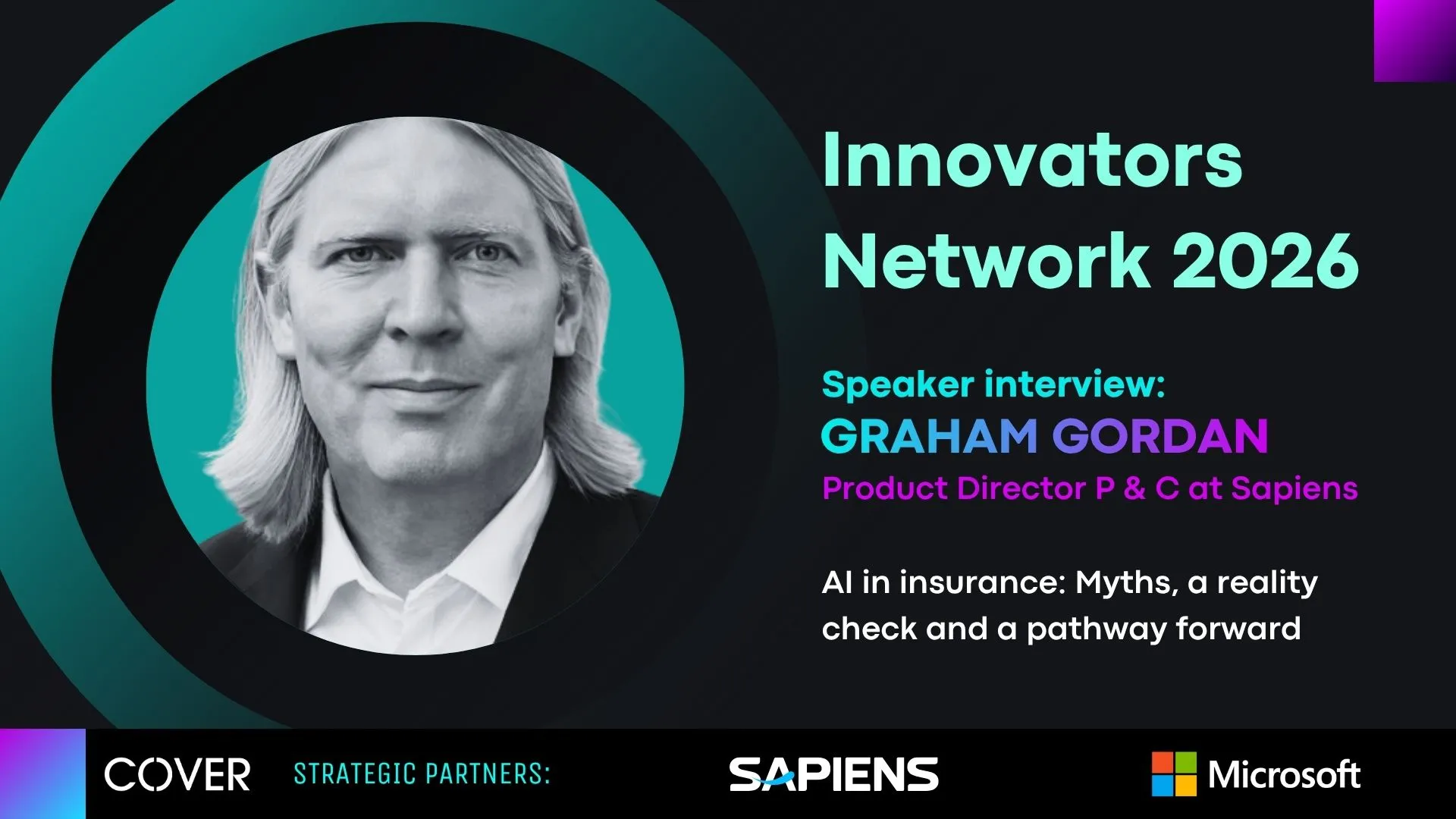
Interview 2: From Momentum to meaningful impact
Graham Gordon
AI landed on the insurance industry fast, and the response was immediate. Hackathons, proof of concepts, new teams, structural changes. But momentum is not the same as value. The discussion unpacks focused execution, why siloed operating models are the real obstacle to AI value, and how the role of technology leadership is shifting from delivery to strategic enablement.
Watch Interview
AI landed on the insurance industry fast, and the response was immediate. Hackathons, proof of concepts, new teams, structural changes. But momentum is not the same as value. The discussion unpacks focused execution, why siloed operating models are the real obstacle to AI value, and how the role of technology leadership is shifting from delivery to strategic enablement.

Interview 3: A multi-speed approach
Rubert Nicolay
Large-scale transformation cannot happen overnight in a regulated, legacy-heavy industry. But the pace of technological change is not slowing down. Rupert Nicolay makes the case for running at multiple speeds simultaneously: capturing short-term value in claims, onboarding and contact centre operations, while building towards a three-to-five year horizon that reimagines products, distribution and operating models entirely. The message is cautious urgency: move quickly enough to stay competitive, thoughtfully enough to build sustainable advantage.
Watch InterviewLarge-scale transformation cannot happen overnight in a regulated, legacy-heavy industry. But the pace of technological change is not slowing down. Rupert Nicolay makes the case for running at multiple speeds simultaneously: capturing short-term value in claims, onboarding and contact centre operations, while building towards a three-to-five year horizon that reimagines products, distribution and operating models entirely. The message is cautious urgency: move quickly enough to stay competitive, thoughtfully enough to build sustainable advantage.

Interview 4: Strategy without execution is just activity
Marc Wilson
Having a strategy is not the problem. Most organisations do. The problem is deploying that strategy into an organisation that is not structured, skilled or incentivised to execute it. Marc Wilson examines the execution gap: why piloting purgatory is costing organisations real value, why AI is increasing cognitive load rather than simply reducing it, and why adaptability has become the single most important organisational capability in an environment where no fixed plan survives contact with reality.
Watch InterviewHaving a strategy is not the problem. Most organisations do. The problem is deploying that strategy into an organisation that is not structured, skilled or incentivised to execute it. Marc Wilson examines the execution gap: why piloting purgatory is costing organisations real value, why AI is increasing cognitive load rather than simply reducing it, and why adaptability has become the single most important organisational capability in an environment where no fixed plan survives contact with reality.

COVER Innovators' network E-book 2026
This edition of COVER Innovators Network 2026 E-book explores how artificial intelligence, digital transformation and leadership are reshaping the future of insurance.
Through expert presentations, executive interviews and industry roundtable insights, the publication examines the shift from technology hype to practical business value.
It highlights the importance of trust, data, culture and strategic execution in building more intelligent, customer-focused insurance businesses prepared for a rapidly evolving digital future.
Through expert presentations, executive interviews and industry roundtable insights, the publication examines the shift from technology hype to practical business value.
It highlights the importance of trust, data, culture and strategic execution in building more intelligent, customer-focused insurance businesses prepared for a rapidly evolving digital future.