
How a 15-year business journey found a new way to help people navigate change
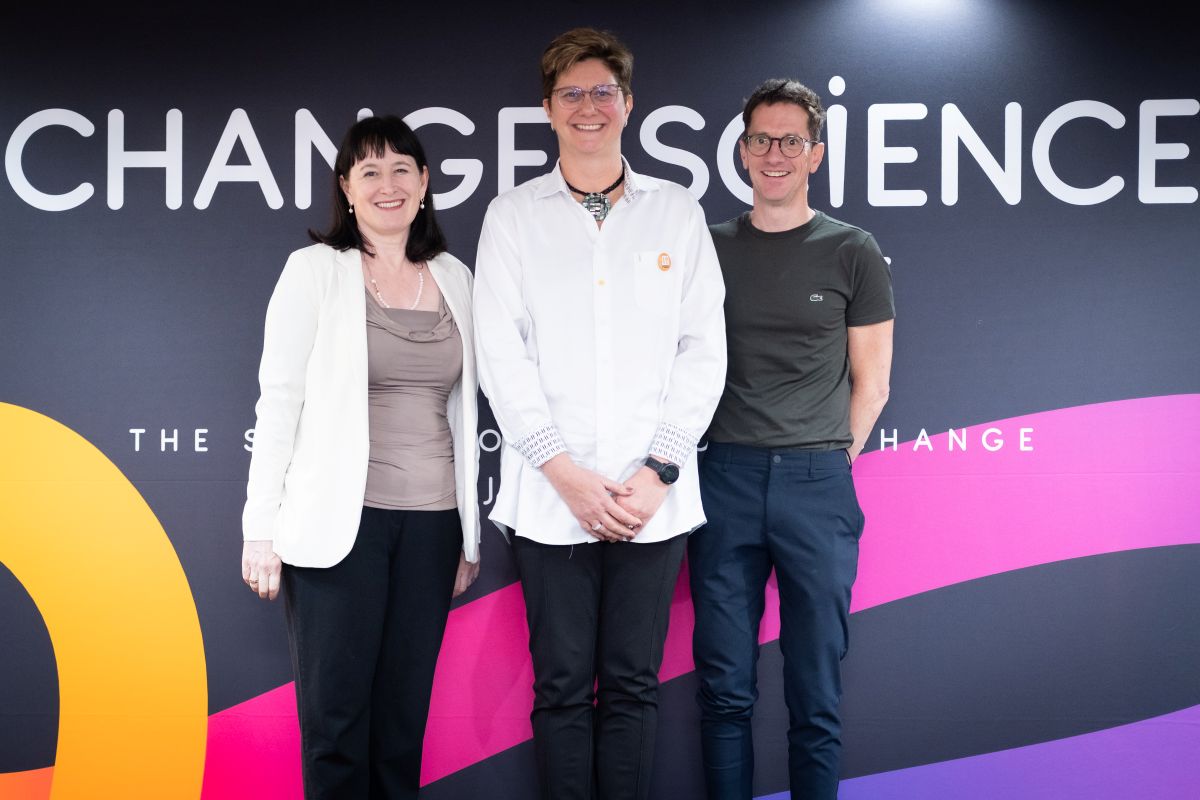
The Change Science Institute (CSI), founded in 2025, is the culmination of life insurer BrightRock’s 15-year exploration of how people experience and navigate change. The research led entity is dedicated to translating the science of change into practical tools and insights that help people better manage life’s transitions.
Brendan Wade, Executive Lead of the Change Science Institute, describes it as a natural extension of BrightRock’s purpose; moving from designing adaptive insurance products to building a body of knowledge about how humans can adapt to real-world challenges.
The making of a change-led Institute
When BrightRock was founded in 2011, it was with this insight: life changes, and people’s needs change with it.
This is a simple, human truth, but as BrightRock CEO, Suzanne Stevens, reflects, "The insurance industry had never seemed to acknowledge it. Consequently, life insurance products were rigid, one-size-fits-all offerings. This approach was at odds with the reality of people’s lives, which are neither homogenous nor static.”
BrightRock was a pioneer, putting change and changeability at the centre of its products, and designing the world-first needs-matched life insurance that is tailored not only to fit each individual client, but to adapt with them over the course of their lives. Fifteen years later, BrightRock is one of South Africa’s leading life insurers, and the only insurer that offers needs-matched solutions.
But adaptability is more than just a guiding principle for life insurance product design. BrightRock realised that change was not only something to insure against, but something people needed help understanding and navigating. It is fundamental to the company’s stated purpose: to help people better navigate the changes in their lives. And as the scale and complexity of change accelerated globally, socially, economically, and technologically, this purpose began to demand new expression beyond insurance alone.
Taking purpose from the functional to the emotional
The Change Exchange was one of BrightRock’s earliest expressions of its purpose beyond insurance. Launched in 2013, it is an online platform dedicated to exploring real-life stories of transition across personal, professional, and social contexts.
“The development of Change Exchange was a recognition that people feel more willing and confident to navigate change simply by knowing that others have done the same,” said Wade. “In essence, other people’s stories provide emotional assurance that we are not alone. In fact, there is science to back this up.”
Over time, thousands of stories revealed recurring themes, behaviours, and mindsets, creating a growing body of insight into the emotional and psychological dimensions of change. These insights raised a deeper question: could the patterns emerging from lived experiences be understood through scientific frameworks and could that understanding be applied in ways that meaningfully help people navigate change?
This question marked a shift from storytelling to structured inquiry. Conversations with scientists and academics across disciplines followed, and what began as a platform for shared experience evolved into what is today known as the Change Science Institute.
The emergence of change science
Over the last five years, these collaborations between BrightRock’s team and partners have led to the development of concepts like change-readiness, change-fitness, and change-stickiness. These concepts have been put to practical use in new tools and resources like the Change Personality Quiz, the Change-ready score, the 3-Word Sherpa, and the Change Programme.
“It was clear that science was rich in insight and full of potential for people, and that it could have powerful implications for further innovation,” said Stevens.
It was also apparent that, although there is a lot of science around change, there is no single, organised field of ‘change science.’ Rather, it draws from diverse and disparate areas like social science, especially psychology. But it also comes from other places. For example, neuroscience has much to teach us about how our brains react to change. Is it far-fetched to look at geographical and environmental change and find insights from that? And what about technology? How will change, itself, change?
“Despite the abundance of research, there is a real gap between academic insight and everyday application,” Stevens says. “People are living with constant disruption, yet much of what we know about change remains inaccessible and fragmented.”
Behavioural science in action
The Institute’s mandate is to translate credible, cross-disciplinary research into practical tools, insights, and programmes that help people navigate life more effectively.
In its first year, the Institute announced Henley Business School as an academic partner, and is currently, developing a new partnership and resources with Hasso Plattner d-school Afrika. Additional projects are in the discovery stage.
Wade, concludes: “In time, the Institute will become a tree of knowledge, which we intend to put to practical use so that anyone who is navigating the changes that life demands of us can benefit.”
For more information, visit www.changescienceinstitute.co.za.